FRASS embeds financial management insight directly into forest growth, structure, and time.

Financial Optimization
FRASS applies financial management insights unlike anything applied to timberland properties before. Forest Econometrics is home to the Forest Resource Analysis System Software (FRASS), an analytical platform that embeds economics directly into forest structure, growth, and time. FRASS connects biological reality to financial outcomes without abstraction, shortcuts, or external overlays. Unlike legacy tools that treat economics as an after-the-fact adjustment, FRASS integrates valuation logic into the forest itself. Value emerges from species composition, taper, height, density, access, management decisions, and market context—measured, modeled, and traced through time. Forestlands are not static assets. They grow, mature, and change across decades. FRASS captures those dynamics and translates them into defensible economic insight suitable for real decision-making.
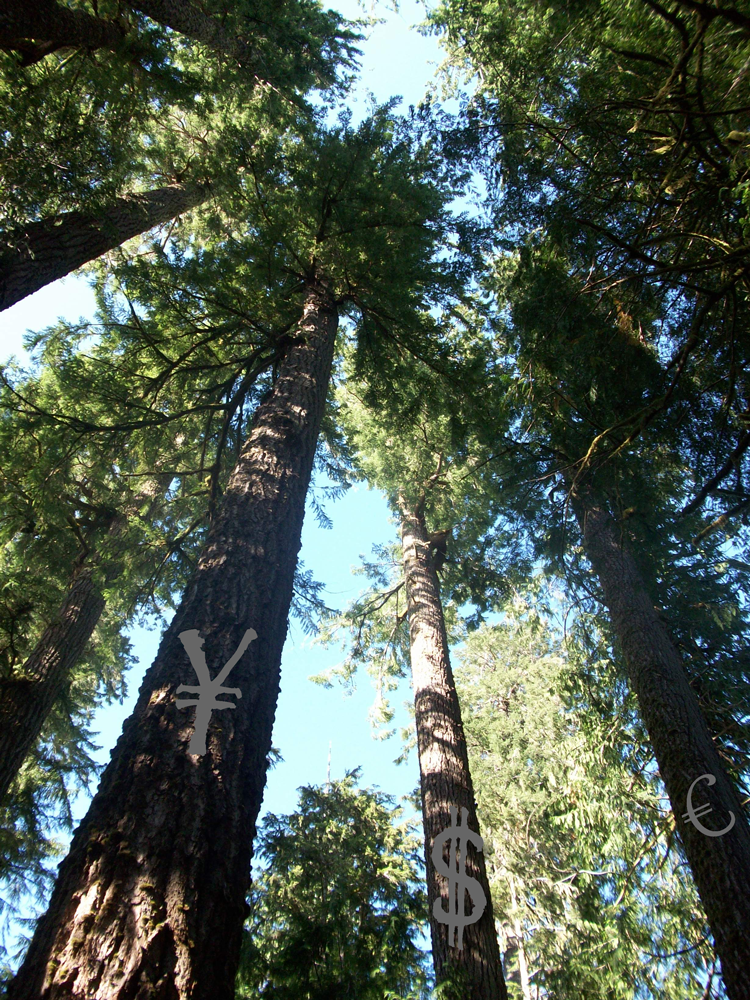
FRASS applies financial management insights unlike anything applied to timberland properties before.
What FRASS Does
FRASS integrates forest biometrics, growth modeling, and real-world market economics into a single, coherent analytical system. It evaluates forestland value across time by linking tree-level structure—such as species, diameter, height, crown characteristics, and taper—to stand dynamics, management actions, and delivered-log market conditions.
Rather than treating economics as an external overlay, FRASS embeds financial logic directly into forest growth and structure. This allows users to evaluate how silvicultural decisions, harvest timing, access, and market variability interact biologically and economically through time. The result is a system that reflects how forests actually function, rather than relying on averages, static assumptions, or disconnected spreadsheets.
The platform supports long-term stewardship and defensible valuation for private landowners, public agencies, tribes, consultants, and investors. FRASS produces transparent, repeatable results that can be explained, audited, and trusted—whether the objective is appraisal, planning, policy analysis, or investment decision-making.






Engineering, Mentorship, and the Next Generation
FRASS is not a static product. It is a living engineering system that continues to evolve as new data sources, analytical methods, and computing environments emerge.
Key portions of the platform are advanced through collaboration with senior engineering students from the School of Electrical Engineering and Computer Science at Washington State University, working within faculty-guided Capstone projects. These students contribute directly to production-level components of FRASS, including analytical logic, data pipelines, database systems, and interface integration.
Dr. William E. Schlosser, Founder of Forest Econometrics and Principal Economist at D&D Larix, LLC, serves as a Capstone Team Mentor, guiding WSU Engineering students as they apply rigorous engineering practice to real, applied natural-resource systems. This mentorship bridges academic training with professional-grade system design, testing, and deployment.
Through this work, students gain experience operating in complex, data-intensive environments beyond the classroom, while contributing meaningful, deployable capabilities to the FRASS platform. The collaboration reflects a shared commitment to technical excellence, applied problem-solving, and the development of the next generation of engineers working at the intersection of science, data, and decision-making.
Why FRASS Exists
Forestlands grow, mature, and change across decades. Their value is shaped not only by timber yields, but by habitat structure, water resources, carbon storage, cultural meaning, and stewardship decisions that unfold across generations.
Traditional valuation approaches often rely on static assumptions, regional averages, or simplified projections that obscure how value is actually created on the ground. FRASS exists to replace those abstractions with measurable, traceable relationships between forest structure and economic outcome.
FRASS makes forestland value transparent, defensible, and repeatable, anchored in real biometrics, real markets, and real economics rather than assumptions, averages, or snapshots in time.
Financial accountability is a prerequisite for responsible stewardship. Public agencies, tribes, and private owners alike must justify decisions that affect land, communities, and future options. FRASS was built to provide that accountability without stripping forests of their ecological, cultural, or temporal complexity.
Your Forestlands, Your Data
- Geographic Information Systems (GIS): spatial polygons for roads, streams, features, and habitat.
- Digital Raster Imagery: including LiDAR at sub-meter resolution.
- Aerial Photography & Satellite Imagery: multi-spectral datasets capturing forest and terrain features.
- Forest Biometrics: species, habitat, density, and health modeled through time.
- Forest Econometrics: linking micro- and macroeconomic forces to each forest’s market context.
Online Access to Discover New Opportunities
These tools empower professionals seeking the highest returns from their forestland investments. They are integrated in the Forest Resource Analysis System Software (FRASS)—developed by Dr. William Schlosser of D&D Larix LLC.
FRASS processes input data, applies econometric algorithms, and delivers defensible reports to managers, investors, tribes, and agencies through a secure, permission-based system.
Visitors may request a no-cost virtual tour of the FRASS demonstration site to explore how these analyses guide property-specific decisions.

FRASS is developed and maintained by D&D Larix, LLC through Forest Econometrics. The platform is used by public agencies, tribes, consultants, investors, and private landowners seeking defensible, transparent insight into forestland value and long-term decision-making.
FRASS supports decisions that must stand up to professional scrutiny, policy review, and intergenerational responsibility. It is designed for those who need to understand not just what a forest is worth today, but how that value is created, sustained, and realized through time.
While you watch these videos, click the CC (Closed Captioning) button to read along with the narration.
Watch FRASS theme videos on our playlist, subscribe to be alerted when new videos are posted!